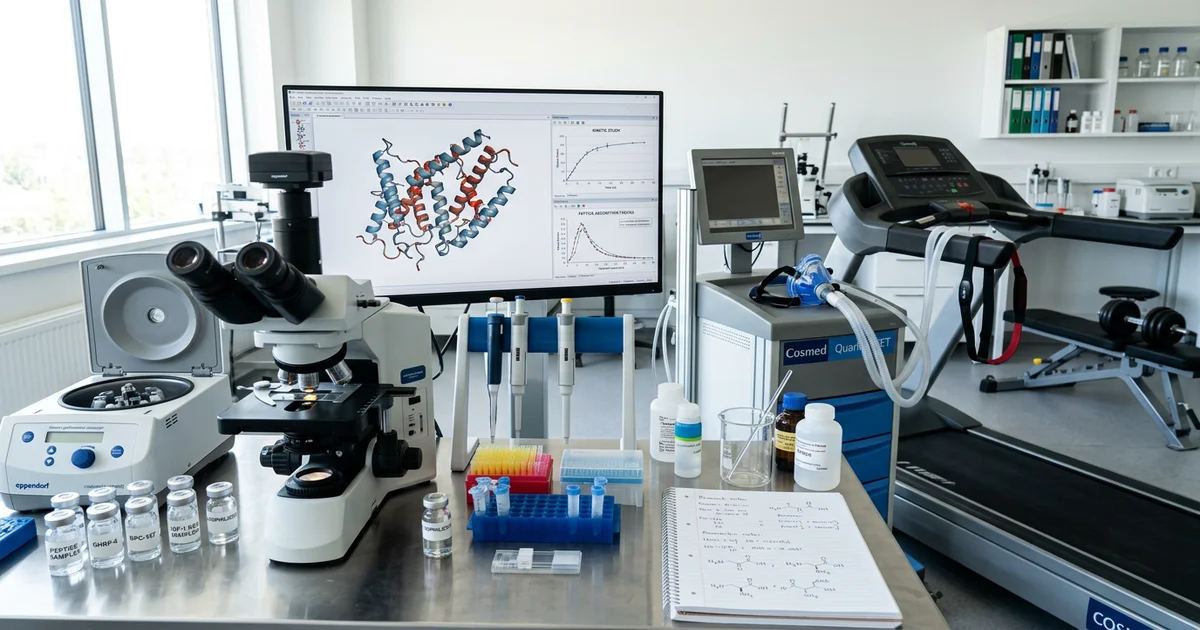
What are peptides, and why has interest in these molecules grown so substantially among athletes, researchers, and health optimization communities? At their core, peptides are short chains of amino acids linked together by peptide bonds, making them structurally similar to proteins but significantly smaller. While a protein might contain hundreds or thousands of amino acids, a peptide typically consists of anywhere from two to fifty amino acids. This distinction matters because size influences how a molecule behaves in the body, how it's absorbed, and what biological processes it may interact with. Understanding peptide science requires examining both basic biochemistry and the emerging body of research connecting specific peptide sequences to physiological functions.
Every peptide begins with amino acids, the same foundational molecules that form all proteins in the human body. When two amino acids join together, a water molecule is released and a peptide bond forms between the carboxyl group of one amino acid and the amino group of another. This reaction, known as a condensation reaction, can repeat many times over to produce chains of varying lengths. A chain of two amino acids is called a dipeptide, three amino acids form a tripeptide, and chains of up to approximately fifty amino acids are broadly classified as polypeptides.
The sequence of amino acids within a peptide chain determines its three-dimensional shape, and that shape determines its function. Even a single change in the amino acid sequence can alter how a peptide interacts with receptors, enzymes, or other proteins. This sensitivity to sequence explains why researchers study synthetic peptides so closely: by designing specific sequences, scientists can attempt to target discrete biological pathways with a level of precision that broader nutritional or pharmacological interventions may not offer.
For a comprehensive overview of the research landscape in this area, see Research Peptides in Fitness: A Complete Science Overview, which maps the key topics and links to the detailed studies covered across this site.
Peptides are also classified by their origin. Endogenous peptides are produced naturally within the body and include well-known examples such as insulin, glucagon, and oxytocin. Exogenous peptides come from external sources, including food-derived peptides found in hydrolyzed proteins and synthetic peptides developed in laboratory settings. Athletes and researchers interested in performance and recovery have focused considerable attention on the synthetic category, particularly on sequences designed to mimic or amplify endogenous signaling molecules.
A common source of confusion in fitness communities involves distinguishing between peptides, proteins, and free amino acids. The differences are primarily structural and functional. Free amino acids are individual units that the body uses as direct building materials or precursors to neurotransmitters and other compounds. Proteins are large, complex molecules that serve structural roles, enzymatic functions, and countless other purposes throughout physiology. Peptides occupy the middle ground, small enough to cross certain biological barriers more readily than full proteins, yet structurally complex enough to carry specific biological signals.
From an absorption standpoint, smaller peptides and free amino acids are generally absorbed through the intestinal wall via different transport mechanisms than whole proteins. Dipeptides and tripeptides, for instance, can be transported intact across intestinal epithelial cells through a carrier called PepT1, which may contribute to faster absorption compared to some protein sources. This characteristic has made peptide-based supplements attractive to athletes focused on post-exercise recovery, where timing and bioavailability are considered relevant variables.
The signaling capacity of peptides also sets them apart. Many peptides function as ligands, molecules that bind to specific receptors on cell surfaces to initiate cascades of downstream biological activity. This receptor-binding behavior is the mechanism through which peptides like ghrelin influence appetite regulation, or through which naturally occurring growth factors communicate with target tissues. Researchers studying performance-related peptides are often examining this signaling capacity and how it might be applied in controlled experimental contexts.
The peptide landscape is broad, and not all peptides are relevant to athletic performance or recovery research. Several categories have received significant scientific and practitioner attention:
Researchers and practitioners working with these categories often cross-reference findings related to subjects like growth hormone regulation, inflammatory pathways, and recovery protocols to build a more complete picture of how peptide interventions might function within a broader physiological context.
When a peptide enters the body, its fate depends heavily on the route of administration, its amino acid sequence, and its resistance to enzymatic degradation. Oral administration presents a significant challenge for many peptides because the gastrointestinal environment contains proteolytic enzymes designed to break proteins and peptides into their constituent amino acids. Larger, more complex peptides are often degraded before reaching systemic circulation in meaningful concentrations.
Subcutaneous and intramuscular injection routes bypass the gastrointestinal tract entirely, allowing peptides to enter the bloodstream more directly. This is why many research-grade peptides intended for scientific investigation are formulated for injection rather than oral use. Some peptide researchers have worked on oral bioavailability strategies, including encapsulation technologies and chemical modifications to improve stability, but this remains an active area of development rather than a solved problem.
Once in systemic circulation, peptides interact with target tissues based on their receptor affinity and distribution. Peptides are cleared from the bloodstream through several mechanisms, including enzymatic degradation by peptidases, filtration through the kidneys, and uptake by target tissues. The half-life of a peptide, meaning the time it takes for half the circulating concentration to be cleared, varies widely by sequence and can range from minutes to several hours. Researchers studying peptide pharmacokinetics pay close attention to these clearance dynamics when designing dosing protocols and interpreting outcome data.
The application of peptide research to athletic performance sits at the intersection of endocrinology, exercise physiology, and pharmacology. Several lines of inquiry have emerged as particularly relevant to sports science communities:
According to practitioners working in sports medicine settings, peptides associated with growth factor signaling have been explored as potential tools for accelerating recovery from musculoskeletal injuries. The theoretical basis involves stimulating endogenous repair mechanisms rather than introducing external anti-inflammatory agents. Animal model data has shown interesting results in tendon and muscle repair contexts, but translating these findings to human athletic populations requires considerably more clinical investigation.
Several peptide categories have been studied in relation to fat metabolism and lean mass preservation. Growth hormone secretagogues represent one such category, given growth hormone's known roles in lipolysis and protein synthesis support. Research in this area often involves measuring changes in IGF-1 levels as a downstream marker of growth hormone activity, alongside body composition assessments using methods like DEXA scanning. Results in human populations have been mixed, and researchers emphasize the need for controlled, long-term studies.
Some growth hormone-releasing peptides have demonstrated effects on slow-wave sleep architecture in early research. Because slow-wave sleep represents a period of significant hormonal activity and physical restoration, any peptide that reliably influences this phase of sleep would be of considerable interest to performance researchers. The relationship between sleep quality, growth hormone pulsatility, and athletic recovery is a subject athletes and coaches already monitor closely through tools like wearable sleep trackers and recovery protocols.
Certain peptide sequences have been studied for their interactions with inflammatory signaling cascades, including pathways involving NF-kB and various cytokines. The goal in sports science contexts is generally not to suppress inflammation entirely, as acute inflammation is a necessary part of the adaptation process, but to modulate the duration and intensity of inflammatory responses following intense training or injury. Research in this space is preliminary, and practitioners typically incorporate peptide strategies as one component of a broader recovery system.
Athletes considering research into specific peptide compounds should familiarize themselves with related topics such as growth hormone secretagogue mechanisms, collagen synthesis pathways, and the regulatory status of peptides under their sport's governing body rules, as several peptide classes appear on prohibited substance lists maintained by organizations such as WADA.
For athletes approaching peptide science from a performance perspective, the first practical consideration is the distinction between food-derived peptides and synthetic research compounds. Collagen peptides and bioactive food peptides are available as dietary supplements, are generally recognized as safe within normal consumption ranges, and have a meaningful body of research supporting their use for joint health and recovery. Synthetic research peptides occupy a different regulatory and scientific category entirely.
Quality and purity are significant variables in synthetic peptide research. Research suggests that the source of a peptide compound has a substantial impact on the accuracy of experimental outcomes. Contaminated or improperly synthesized peptides can introduce confounding variables that compromise data integrity or pose safety concerns. Researchers working with synthetic peptides typically source from suppliers who provide third-party testing documentation including high-performance liquid chromatography analysis and mass spectrometry verification of purity.
Storage and reconstitution protocols also matter considerably. Many synthetic peptides are shipped in lyophilized, or freeze-dried, powder form and require reconstitution with bacteriostatic water before use. Improper storage, particularly exposure to heat, light, or moisture before reconstitution, can degrade the peptide and reduce its biological activity. Proper handling represents a foundational element of reproducible peptide research.
Athletes involved in competitive sports should consult with their sport's regulatory framework before engaging with any peptide beyond standard food-derived options. The prohibited status of specific peptides varies by sport and competition level, and ignorance of these rules does not protect athletes from sanctions.
The field of peptide science continues to develop at a meaningful pace, with new sequences being characterized, new delivery mechanisms being tested, and a growing body of human trial data gradually supplementing the animal and in vitro research that has historically dominated this area. For athletes and researchers seeking to understand biological optimization at a mechanistic level, peptides represent one of the more scientifically grounded frontiers available for investigation.
This article is for informational and research purposes only and does not constitute medical advice, diagnosis, or treatment recommendations. The compounds and research discussed herein may not be approved for human use in all jurisdictions, and individuals should consult qualified medical professionals before making any decisions related to their health, supplementation, or participation in research activities. For research purposes only — not medical advice.